
The Best Kitchen Herb Garden Hydroponic Kits for Fresh Flavors
Fresh Herbs on Your Counter: Why a Kitchen Herb Garden Hydroponic Kit Changes Everything
Kitchen herb garden hydroponic systems let you grow fresh basil, mint, cilantro, and more right on your countertop — no soil, no outdoor space, no green thumb required.
Best kitchen herb garden hydroponic kits at a glance:
| System Type | Pods | Best For |
|---|---|---|
| Compact Starter Kit | 3 pods | Small kitchens, beginners |
| Standard Countertop Unit | 6 pods | Most home cooks |
| High-Capacity System | 12 pods | Larger harvests |
| Vertical Studio Tower | 16 pods | 1-2 person households |
| Full-Size Vertical Garden | 30 pods | Families of 3-4 |
Seeds typically sprout in 5-10 days and are harvest-ready in 2-3 months. A single kit can yield 6+ months of fresh herbs.
Imagine snipping fresh basil straight from your counter while your pasta is boiling. No last-minute grocery runs. No wilted herb bundles rotting in the fridge.
That’s exactly what these systems deliver.
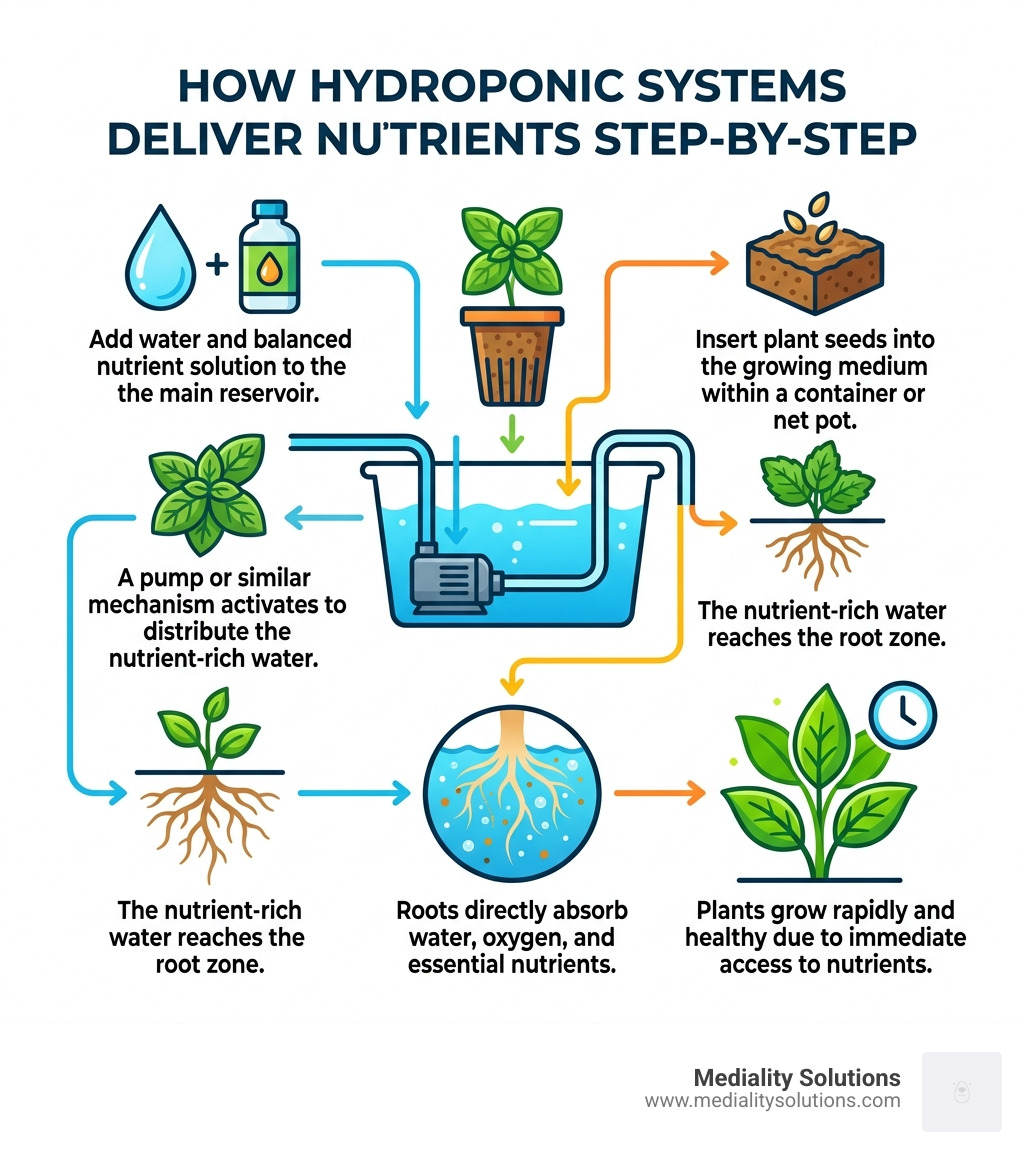
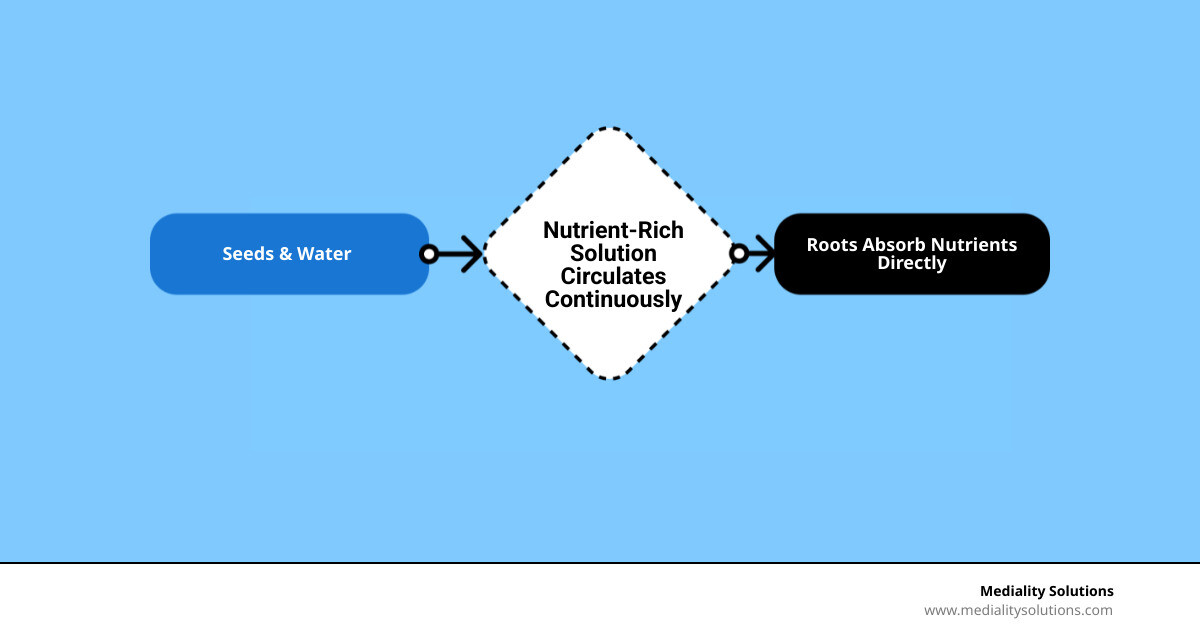
They work by feeding nutrient-rich water directly to plant roots — no soil involved. Herbs actually grow 30-50% faster than in traditional soil. And because there’s no dirt, there are no fungus gnats, no mess, and no overwatering disasters.
The biggest question most people have isn’t whether these systems work — it’s which one is right for their kitchen and budget. That’s what this guide answers.
Why Choose a Kitchen Herb Garden Hydroponic System?
If you have ever struggled to keep a rosemary plant alive on a windowsill, you are not alone. Traditional indoor gardening is tricky because soil can be messy, and light is often insufficient. Transitioning to a kitchen herb garden hydroponic setup solves these problems by creating a controlled environment where the plant’s needs are met automatically.
One of the most significant advantages is speed. Research shows that hydroponic herbs grow 30-50% faster than their soil-grown counterparts. This is because the roots don’t have to “search” through soil for nutrients; they are bathed in a perfectly balanced solution. Furthermore, these systems are incredibly sustainable, using up to 90% less water than traditional gardening. Since the water is contained in a reservoir and recirculated, there is almost zero waste.

Beyond efficiency, there is the “clean factor.” Soil-free cultivation means you won’t find fungus gnats or soil-borne pests invading your kitchen. You get a year-round harvest regardless of the weather outside. For more details on why these systems are superior for indoor use, check out The Best Hydroponic System for Vegetables and Herbs.
Comparing the Best Hydroponic Kitchen Herb Garden Models
When we look at the market in April 2026, the options range from tiny decorative jars to high-tech towers. Selecting the right one depends on your available countertop space and how many herbs you use in your cooking.
| Feature | Compact 3-Pod System | Standard 6-Pod System | Large 12-Pod System |
|---|---|---|---|
| Space Needs | Tiny footprint (approx. 12″) | Breadbox size (approx. 11″) | Larger footprint (approx. 14-16″) |
| LED Wattage | 8W – 15W | 20W – 30W | 24W – 45W |
| Reservoir | 1.2L – 1.5L | 2.5L – 3L | 4L – 5L |
| Automation | Basic light timer | Water/nutrient alerts | App control, misting, and vacation mode on some models |
| Price Point | Budget-friendly | Mid-range | Premium |
For a deeper dive into the top-performing models we’ve seen this year, you can read The 4 Best Indoor Herb Gardens of 2026, Tested & Reviewed.
Choosing Your Kitchen Herb Garden Hydroponic Setup
- Compact 3-Pod Systems: These are the “Keurigs” of the garden world. These models are perfect for beginners who want a “set it and forget it” experience. They often use proprietary pods that already contain the seeds and nutrients.
- Smart 6-Pod Countertop Units: These systems remain a gold standard. They fit comfortably under most kitchen cabinets and feature digital displays that tell you exactly when to add water and plant food.
- Large 12-Pod Family Kits: If you cook for a crowd, high-capacity systems offer more variety. These often feature more powerful lights, adjustable heights, and in some cases a vacation mode that keeps lighting and watering schedules steady while you are away.
- Vertical Towers: For those with floor space, vertical hydroponic towers can accommodate 16 to 30+ plants. These utilize vertical space and often use advanced sensors to monitor plant health, though some features may require a subscription.
- Immersion Jar Setups: For a beautiful, low-tech alternative, some growers use glass jars with a passive wicking or immersion approach. These can blend well with biophilic kitchen decor while still supporting small herb crops.
- Guarantees: Many top brands now offer a “Thrive Promise” or germination guarantee. If a pod doesn’t sprout within 21 days, they will often send you a replacement for free.
Essential Maintenance for Indoor Hydroponics
While a kitchen herb garden hydroponic system does most of the heavy lifting, it isn’t entirely “set and forget.” To keep your herbs lush and prevent issues like algae or root rot, we recommend a simple maintenance routine.
- Water Refills: Depending on the reservoir size and the age of your plants, you will need to add water every 7 to 14 days. Larger, thirstier plants will drink more as they mature.
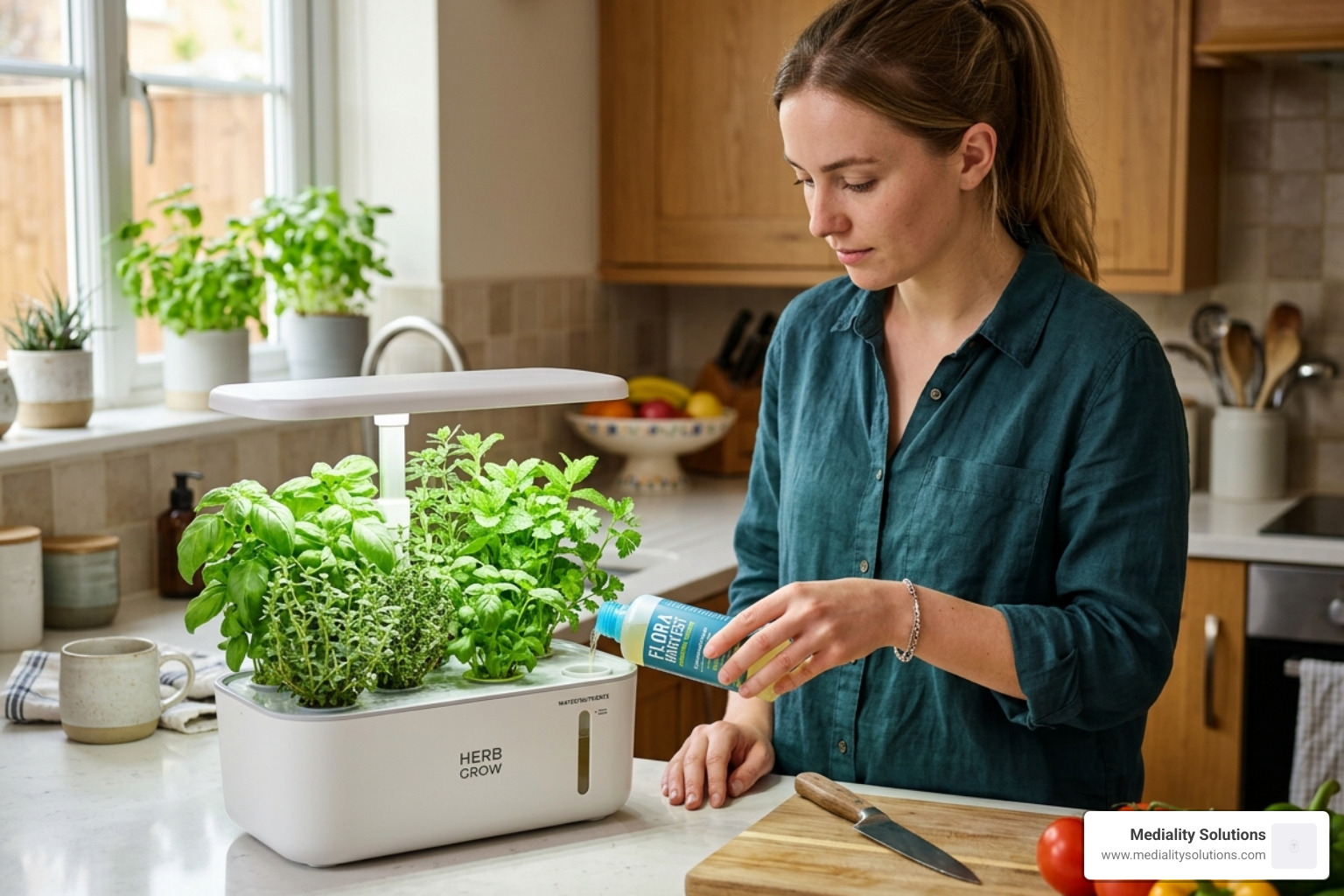
- Nutrient Feeding: Most systems require liquid nutrients added every two weeks. Pro tip: Never add nutrients until the seeds have actually sprouted.
- pH Monitoring: For the best results, keep your water pH between 5.5 and 6.5. If the water is too alkaline or acidic, the plants cannot “drink” the nutrients, leading to yellowing leaves.
- Lighting Cycles: Most herbs need 12–16 hours of light. Most smart systems have built-in timers, but ensure the light is positioned about 2-4 inches above the plant canopy. If the light is too far away, plants become “leggy” and weak.
- Cleaning: Every 1-2 months, or when you finish a harvest, you should perform a deep clean. This involves emptying the reservoir and wiping it down to prevent algae buildup.
Best Herbs for Your Kitchen Herb Garden Hydroponic
Not all herbs are created equal in a hydroponic environment. Here is what we have found grows best:
- Genovese Basil: The superstar of hydroponics. It grows incredibly fast and loves the constant moisture.
- Mint: Warning—mint is invasive! In a hydroponic system, its roots can quickly take over the entire tank. We recommend growing it in an isolated pod or a separate jar.
- Cilantro: This herb is notorious for “bolting” (going to seed) quickly. To have a constant supply, we suggest sowing new seeds every three weeks.
- Chives and Parsley: These are slower to start but provide a steady harvest for 6+ months once established.
- Rosemary and Thyme: These woody herbs are slower to establish in water but can thrive if you are patient. They usually take about 2-3 months before they are ready for a significant harvest.
Frequently Asked Questions about Kitchen Hydroponics
Do hydroponic herb gardens save money compared to store-bought?
Yes, but it takes time to see the return on investment. An upfront investment of $80–$150 for a system might seem steep, but when you consider that a single bunch of organic basil costs $4 at the store and often wilts in three days, the savings add up. A single kitchen herb garden hydroponic pod can produce fresh leaves for six months or more. By reducing food waste and providing “on-demand” snipping, most systems pay for themselves within the first year.
Can I use my own seeds or do I need proprietary pods?
This depends on the system. Some brands prefer proprietary pods, but many systems allow you to use “seedless” pods. You can buy reusable sponges or rockwool cubes and insert any high-quality, non-GMO seeds you like. This is a great way to grow unique herb varieties not found in standard kits.
How do I prevent mold and pests in a soil-free system?
The lack of soil already removes 90% of pest problems, like fungus gnats. However, you should still ensure good airflow around your kitchen. Keep the water temperature between 65–75°F; if the water gets too hot, it can lose oxygen and lead to root rot. Also, avoid bringing store-bought potted plants near your hydroponic system, as they can carry “hitchhiker” pests like aphids or spider mites.
Conclusion
Bringing a kitchen herb garden hydroponic system into your home is more than just a tech trend; it is a sustainable way to elevate your cooking and simplify your life. Whether you choose a compact 3-pod starter kit or a massive vertical tower, the joy of harvesting your own pesticide-free herbs is a “daily triumph” that everyone should experience.
At Mediality Solutions, we believe in making indoor gardening accessible to everyone. From DIY guides to expert care tips, we are here to help you turn your kitchen into a lush, flavorful sanctuary.
